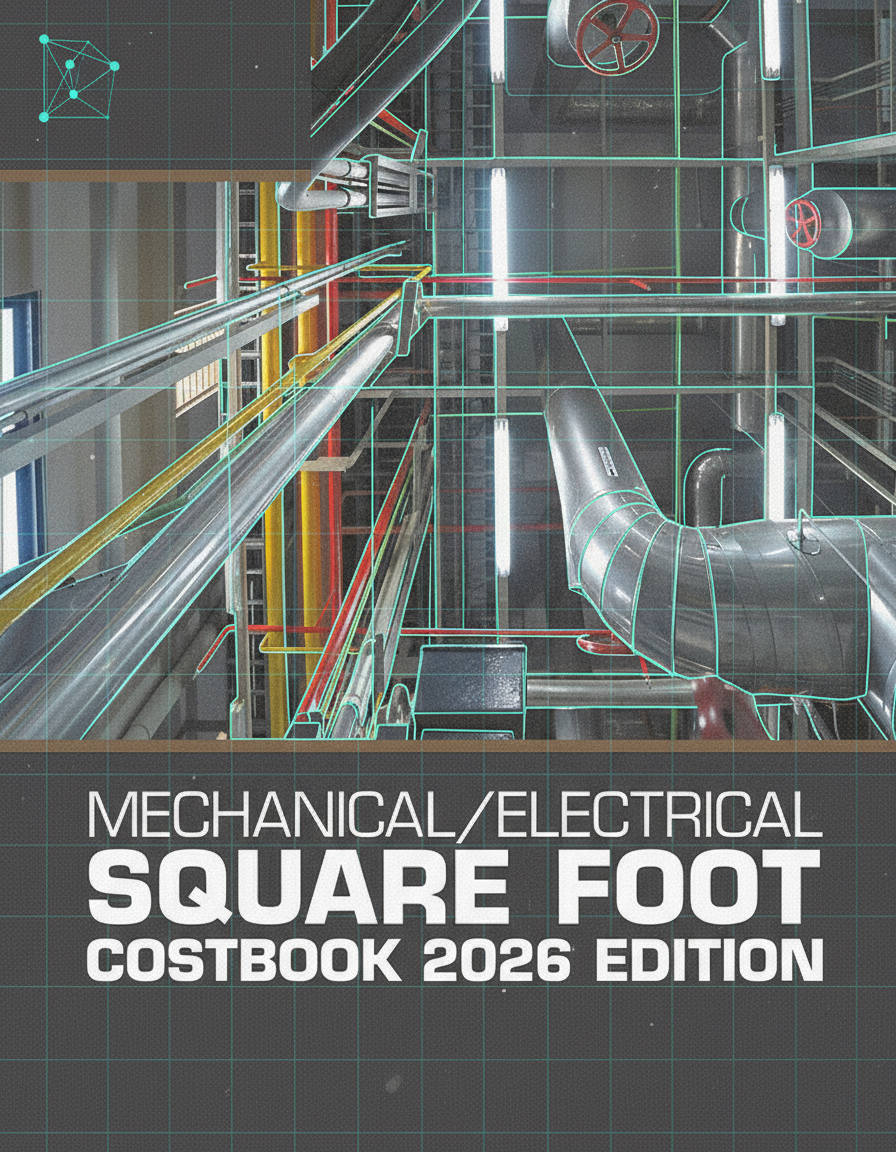
Estimators, architects, and engineers are perpetually searching for reliable data to predict the unpredictable: construction costs. BNI's latest offering, the 2026 Mechanical/Electrical Square Foot Costbook, attempts to do just that by compiling detailed cost breakdowns from 65 actual building projects spanning commercial, institutional, residential, healthcare, and industrial sectors. But can any book truly future-proof your budget?
The 2026 Mechanical/Electrical Square Foot Costbook compiles cost data from 65 building projects, offering a glimpse into the future of MEP estimating – or at least, a well-informed guess. The costbook extends to both new construction and renovation projects, noting inclusions of "high-efficiency systems, geothermal installations, and green design strategies." One wonders if the diversity of these projects will muddle the data rather than clarify it, given the unique challenges each of these systems and strategies brings.
Consider, for example, that geothermal installations, while increasingly popular, often require significant upfront investment in drilling and infrastructure, costs which can vary wildly.
Detail is Devil
In addition to overall square foot costs, the costbook dives into "unit-in-place cost data for specific mechanical and electrical components," which could prove useful for quick estimates and value engineering exercises. However, relying solely on these figures without considering project-specific variables could lead to some expensive surprises down the line.
Metro area multipliers are also included to "adjust costs based on regional construction price variations," which is a welcome addition for those working across diverse locations. One should always be aware of local labour costs and material availability.
Pricing Doubts
The book's publisher, ACHR News, touts it as "The #1 trusted source for the HVACR industry since 1926" and notes that the book compiles detailed cost data from 65 actual building projects – spanning a wide range of types and sizes. For those seeking to subscribe to ACHR News, a link is provided (SUBSCRIBE). Further information about books can be found in their store and more specifically in their books section.
It’s worth noting that the ePublishing company is responsible for design, CMS, hosting, and web development. One also wonders if "costs are escalated to January 2026 levels;" will they still be relevant for long?
Given the current rate of inflation and supply chain disruptions, even a few months can render cost projections obsolete.
Costly Crystal Ball?
The 2026 Mechanical/Electrical Square Foot Costbook may provide some insights, but a hefty dose of scepticism is advised. After all, forecasting the future is best left to those with a penchant for pointy hats and crystal balls.