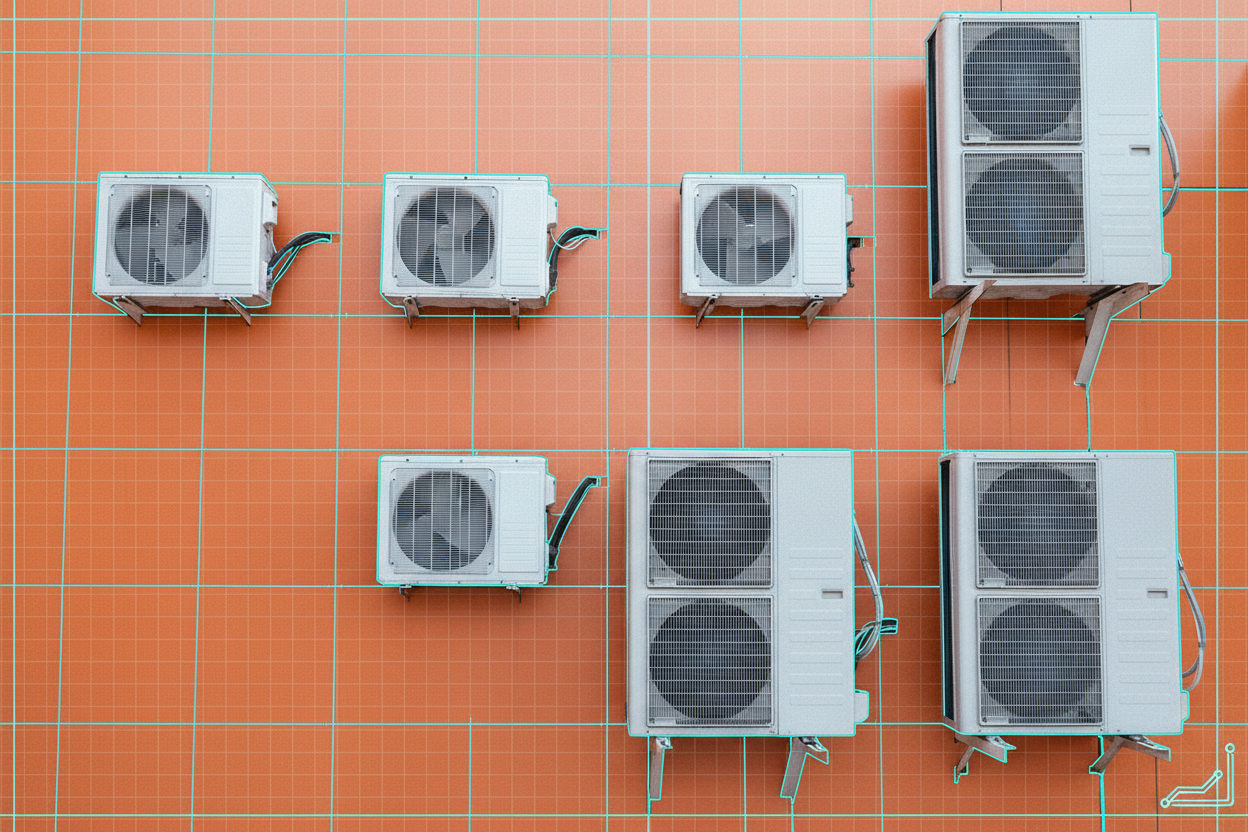
Ten leading companies are pushing for higher minimum energy performance standards (MEPS) for air conditioners – but will it be hot air?
The Climate Group’s Smart Energy Coalition, including Danfoss, Johnson Controls and ABB, wants to double the annual rate of energy efficiency improvements by 2030, in line with COP28 commitments; their argument being that air conditioning is the fastest-growing source of energy demand in buildings.
Efficiency Drive
An open letter from the coalition backs five global principles. These include support for the manufacturing, distribution, and use of high MEPS appliances such as air conditioning, fridges, freezers and lighting, plus more efficient industrial cooling and higher standards for buildings via enhanced building energy codes.
Net Zero Fantasies
The coalition insists that, according to the IEA, staying on track for net zero by 2050 requires the average appliance in 2030 to consume 25% less energy compared to 2020, and new buildings need to use 50% less energy for heating and cooling by 2030.
Sara Vad Sørensen, Danfoss’ vice president, head of public affairs, said: “Cooling has become one of the fastest-growing sources of energy demand and emissions across the world. The technology to deliver highly efficient, low-emissions cooling already exists, but progress now depends on scale and implementation.”
Sustainability Edge?
Katie McGinty, Johnson Controls’ vice president and chief sustainability and external relations officer, commented: “Sustainability is no longer a side conversation; it’s the ultimate competitive edge. Across mission-critical industries we’re seeing the same story: when we pair efficiency, electrification, and digitisation, organisations cut carbon, cut costs, and boost uptime all at once.”
Founded in 2004, The Climate Group operates internationally and works with teams on the ground in the UK, US, Mexico, India, Brazil, The Netherlands, Japan, and China.
Whether this translates into actual change remains to be seen, of course.