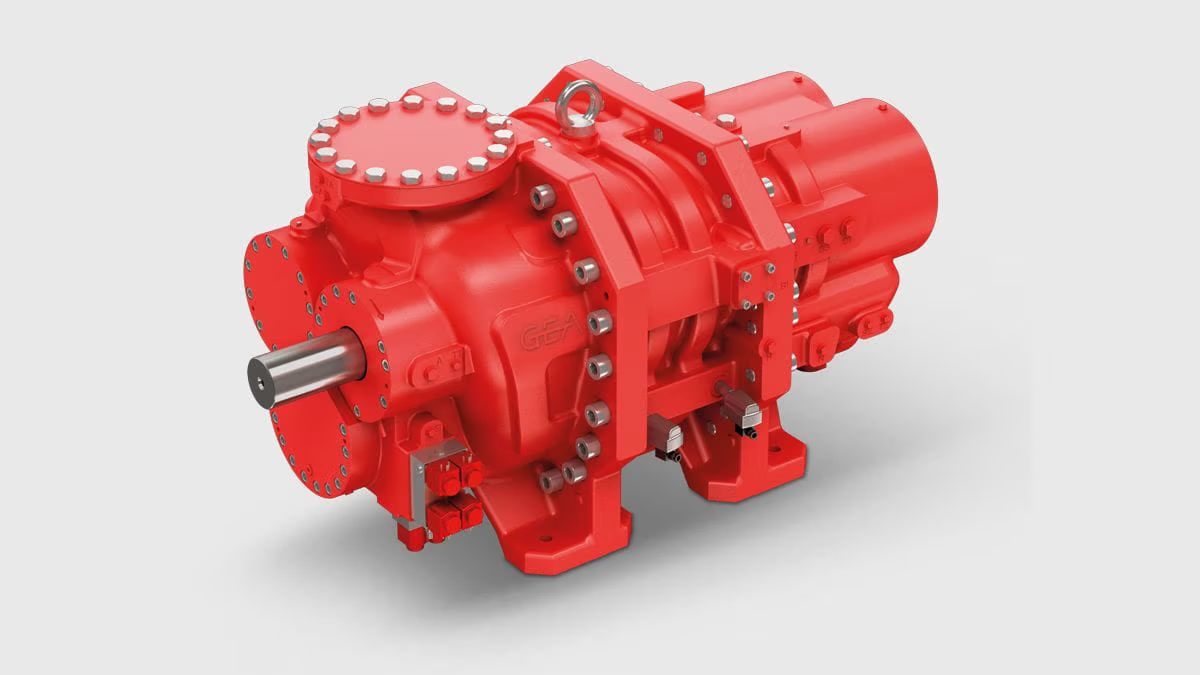
GEA's new Grasso L XHP screw compressor promises efficiency for ammonia heat pumps, but will it deliver? GEA unveiled their Grasso L XHP screw compressor, touting its suitability for ammonia heat pumps and high-pressure applications. Based on what they call "proven GEA Grasso screw compressor technology", the L XHP aims to offer an optimised design for a wide range of applications.
The compressor series comprises three sizes, with swept volumes ranging from 1,990 to 2,748 m³/h at 2,940 rpm. The machines, GEA claims, can be operated at up to 3,600 rpm, resulting in a heating capacity range of 2 to 11 MW per compressor.
Pressure Points
The L XHP boasts a maximum condensation temperature of 95 °C and a design pressure of 70 bar (g). It’s also designed for a maximum final compression temperature of 140 °C. While GEA highlights its suitability for NH₃ heat pumps, one wonders if the market is truly ready for such high-pressure applications.
Time will tell if the industry embraces these pressures, or if they remain a niche solution.
Screw It, Let's Pump
The benefits, according to GEA, include a long service life, high reliability, and easy maintenance. These are, of course, the standard claims for any new bit of kit. What’s more intriguing is the "variable Vi (internal volume ratio)", allowing for greater flexibility. GEA also supplies high-efficiency heat pumps for Tallinn district heating system.
The question remains: is this a genuine leap forward, or simply a refinement of existing technology dressed up in marketing speak? The proof, as they say, is in the performance data.
Ammonia Aspirations
GEA themselves state they are "one of the world’s largest suppliers of systems and components to the food, beverage and pharmaceutical industries". With more than 18,000 employees and revenues of approximately EUR 5.4 billion in 2024, they certainly have the resources to back up their claims. They also note that Ammonia is the natural choice to reduce harmful industrial emissions.
But let’s not get carried away just yet. While ammonia has its advantages as a refrigerant, it also presents its own set of challenges, particularly regarding safety and handling. High pressure ammonia systems are not for the faint of heart.
Ultimately, the success of the GEA Grasso L XHP will depend on its ability to deliver on its promises of efficiency, reliability, and longevity in the real world. Those interested can find more information on GEA's website.
Perhaps this new compressor is a game-changer, but I wouldn’t trade in my existing kit just yet. After all, I’ve learned that in this industry, the only thing higher than the pressure in a new compressor is the pressure from the marketing department.