GEA to Equip BFF's Food-Grade Fermentation Line

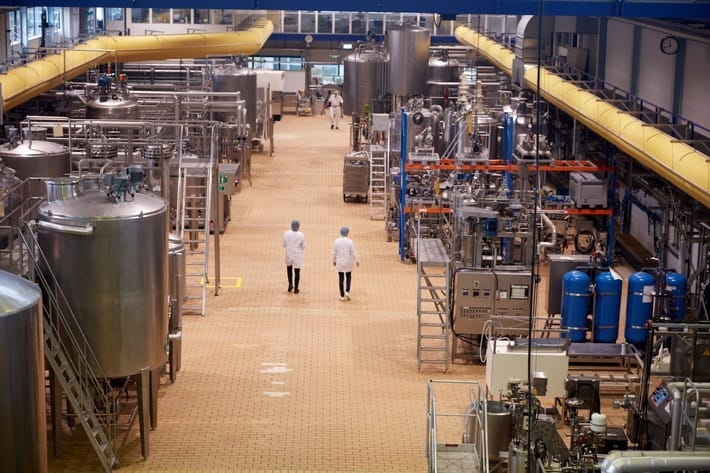
GEA has been selected to deliver and commission a precision and biomass fermentation upscaling line for Biotechnology Fermentation Factory (BFF), an open-access site on the NIZO Food Innovation Campus in Ede, Netherlands. This facility gives food and ingredient companies a food-grade infrastructure to test, validate and scale products such as animal-free dairy proteins, egg-white proteins, specialty enzymes, flavours and fragrances, and other functional biomolecules.
Installation is scheduled for 2026, with pilot operations targeted from 2027.
Frederieke Reiners, Vice President New Food, GEA, said:
Open-access capacity is the critical development link many innovators have been missing. By delivering BFF’s line, we help teams validate their processes faster under food-grade conditions – and as the logical next step from our GEA New Food Application & Technology Center (proof-of-concept) this pilot environment enables application-ready material and decision-grade data sets that de-risk the move toward commercial manufacturing. It also advances Mission 30, where biotechnology meets scalable industrial production.
Marcel Oogink, Managing Director, Biotechnology Fermentation Factory (BFF Ede), said:
Our aim is straightforward: to give the industry dependable open-access capacity to validate processes under realistic, food-grade and scalable conditions. With GEA supplying this line, companies will gain the technical reliability and speed they need to move confidently from lab development toward industrial readiness.
Many precision and biomass fermentation projects stall between lab proof-of-concept and the first commercial investment decision. BFF’s model addresses this gap with a single, coherent validation environment that de-risks tech transfer, accelerates time-to-validation and supports Europe’s move toward biotechnology-enabled food production. BFF operates as an open-access facility, offering a bookable fermentation upscaling capacity, process expertise and quality procedures to run pilot campaigns and generate decision-grade data.
This provides the missing middle where innovators can validate under food-grade conditions and move faster toward first commercial orders.